

Authors:
dr Sylwia Hefczyńska-Lewandowska, dr Mateusz Barta
Stanisław Wyspiański Academy of Theatre Arts in Kraków
Faculty of Dance Theatre in Bytom
Faculty of Puppet Theatre in Wrocław
The research project Collisions. Revitalizing through Embodiment. The Creative Process in Theatre Inspired by Space / a Mobile Object was a continuation of inter-university collaboration conducted for several years with the Magdalena Abakanowicz University of the Arts in Poznań. The main axis of this cooperation is a creative laboratory for students. This laboratory takes the form of an artistic plein-air workshop, during which visions and creative ideas from different artistic disciplines intersect. This working format stems from the belief that immersion in shared creative practice among representatives of theatre, dance, architecture, and scenography enables the discovery of new forms of expression and stage language. By stepping beyond familiar territory, we are in a sense compelled to construct new perspectives and discover unconventional paths of creation.
In the academic year 2024/2025, the idea of plein-air meetings was realized in an expanded format—this time as a three-part collaboration. The research project Collisions. Revitalizing through Embodiment was dedicated to students and faculty members of three different departments. The Faculty of Dance Theatre in Bytom and the Puppet Theatre Faculty in Wrocław both originate from the same parent institution—the Stanisław Wyspiański Academy of Theatre Arts in Kraków—yet they differ in many respects, placing emphasis either on embodiment (central to the processes at the Faculty of Dance Theatre) or on animating inanimate matter (as in the case of the Puppet Theatre Faculty). In dialogue with the Studio of Theatrical Phenomena at the Faculty of Interior Architecture and Scenography in Poznań—which moves beyond thinking of scenography as mere decoration and instead seeks answers to questions about contemporary scenography—we aimed to create a compelling encounter. An encounter that could generate inspiring processes and outcomes.
The main idea of the workshop was artistic exchange and collaborative practice among students and faculty. Its goal was to facilitate direct meetings between members of the partner departments, to establish cooperation, and to collectively activate imagination around selected themes and issues. It also aimed at shaping and realizing ideas through creative work at the intersection of dancer, actor, choreographer, and scenographer. Students from the Faculty of Interior Architecture and Scenography were tasked with developing concepts for a mobile object and constructing it during the workshop. In collaboration with students from the Faculty of Dance Theatre and the Puppet Theatre Faculty, they then refined the final version of the object/prop, incorporating the perspectives of dancers, actors, and choreographers. The task of the students from the Faculty of Dance Theatre and the Puppet Theatre Faculty was to develop an appropriate movement language and modes of bodily and formal expression, based on their acting, animation, and dance competencies, ensuring that these responses corresponded to the designed objects, spatial arrangements, and props.
On the following pages, we present concepts developed by students of the University of the Arts in Poznań, which were used during the laboratory work in Michałowice.
INSPIRATIONS
I. FAUSTYNA STARK
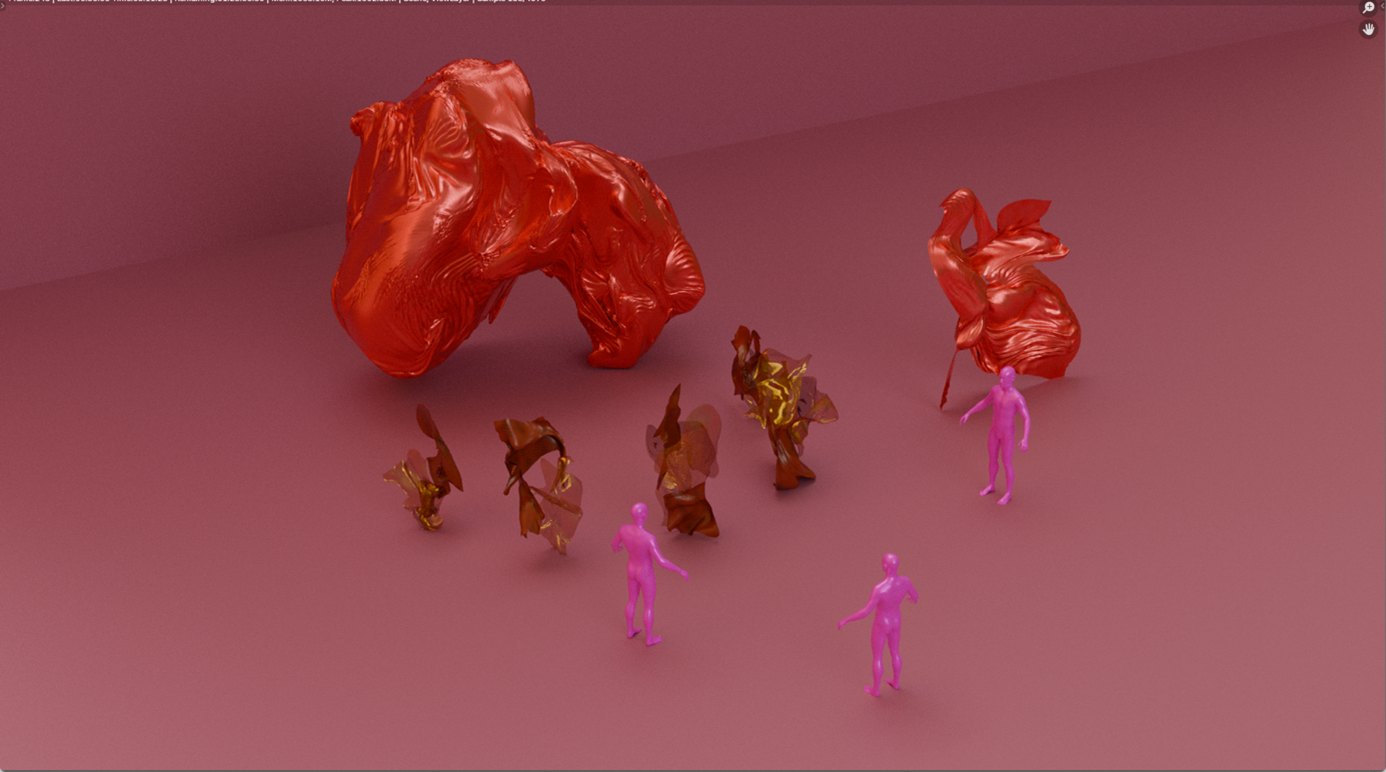
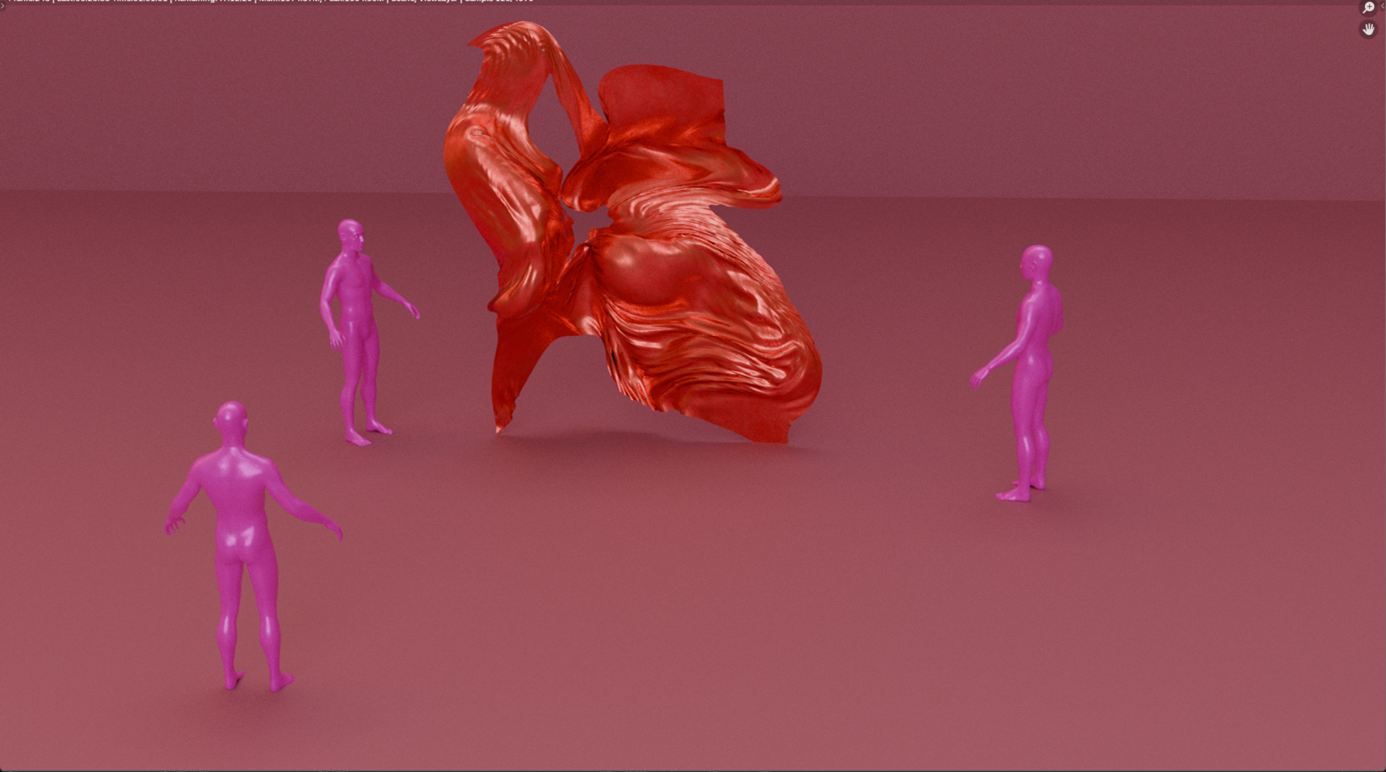
The premise is to create a performance corresponding to the concepts of ritual and the meta-body. Partly, the function of music will be taken over by “Food” by Gertrude Stein. Through its numerous repetitions and combinations of words, the text becomes rhythmic and musical in its form.
The starting point is the notion of the meta-body and the social body. The social body refers to the functioning of social structures whose hierarchy and unity are reinforced through shared rituals and food taboos. The meta-body, in turn, addresses the ambiguity and shifting belonging of the body within a ritual, where identity transfers from one individual to another, as well as from an individual to an object or food. These concepts change their meaning and form within a closed loop of elements belonging to an imagined—ritual—order.
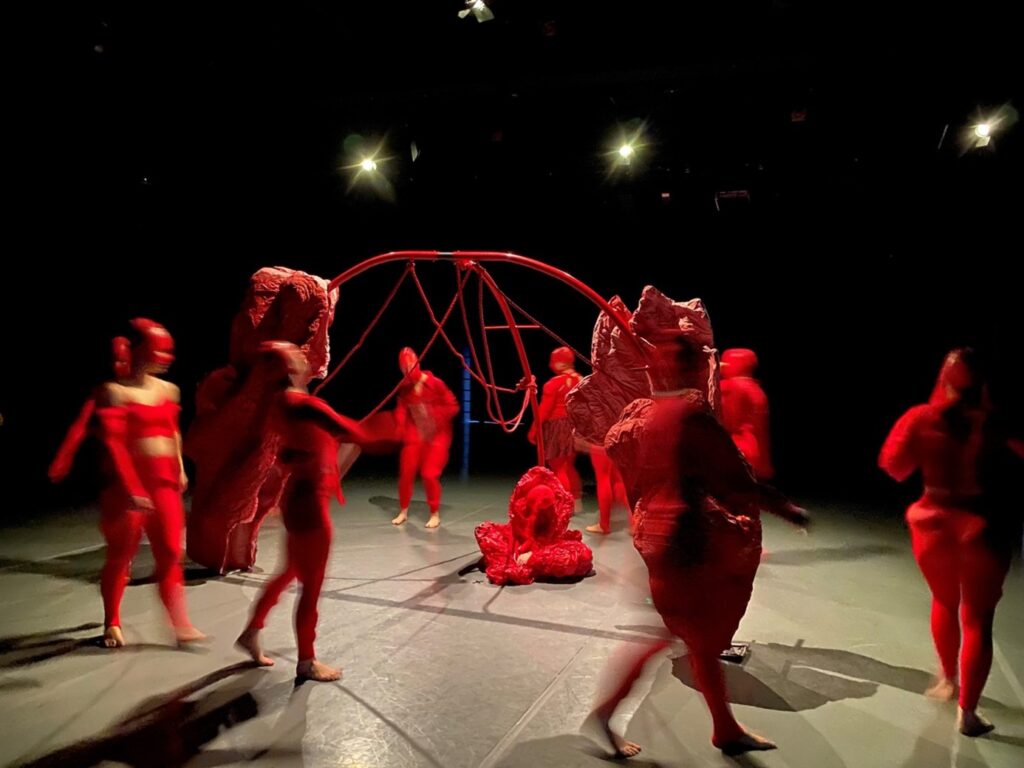
In the context of the performing arts, and especially dance, the meta-body refers to the possibility of experiencing through another body. The participants of the performance become a temporary social body, created for a specific moment, collectively experiencing the staged reality. The dancers are its elements with a higher degree of initiation, as they perform and open this reality to the audience. They form a single substance with the stage space—they are its living, moving aspect.
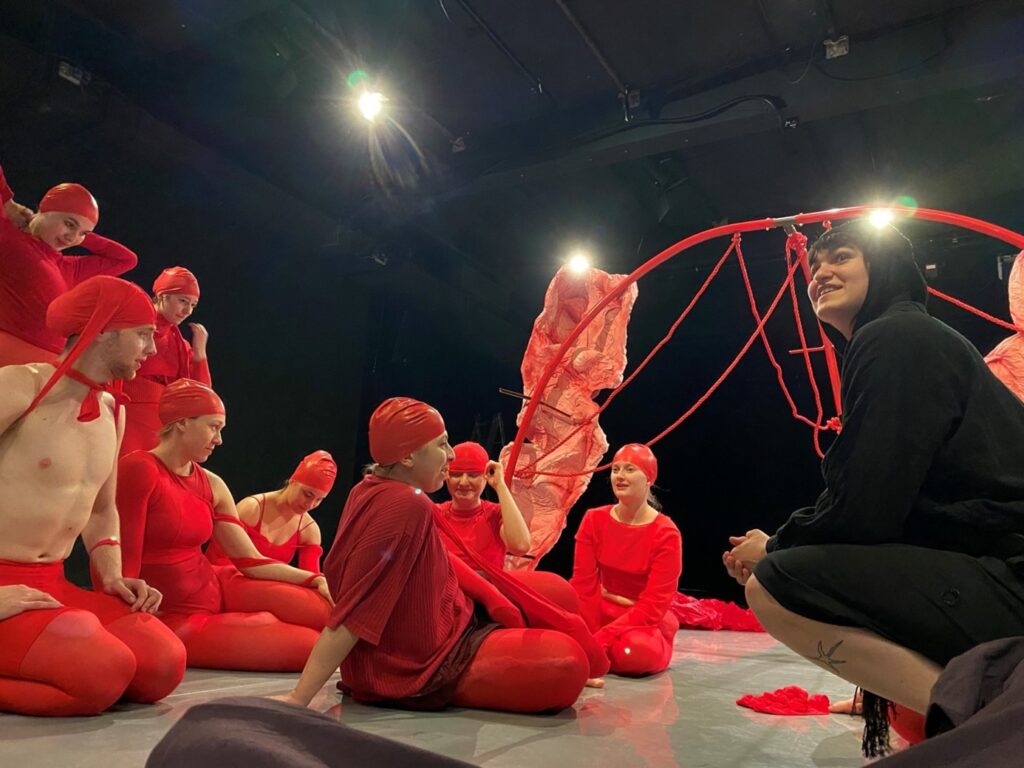
The placement of the installation at the center suggests the creation of a circle and movement around it. The elongated, flexible elements extending from it form a direct connection with the dancers, while their reach defines the range of movement. The base of the installation is stable and rigid, with an organic form. The installation will also include an opening that allows entry into or passage through it.
II. ALEKSANDRA SORNEK
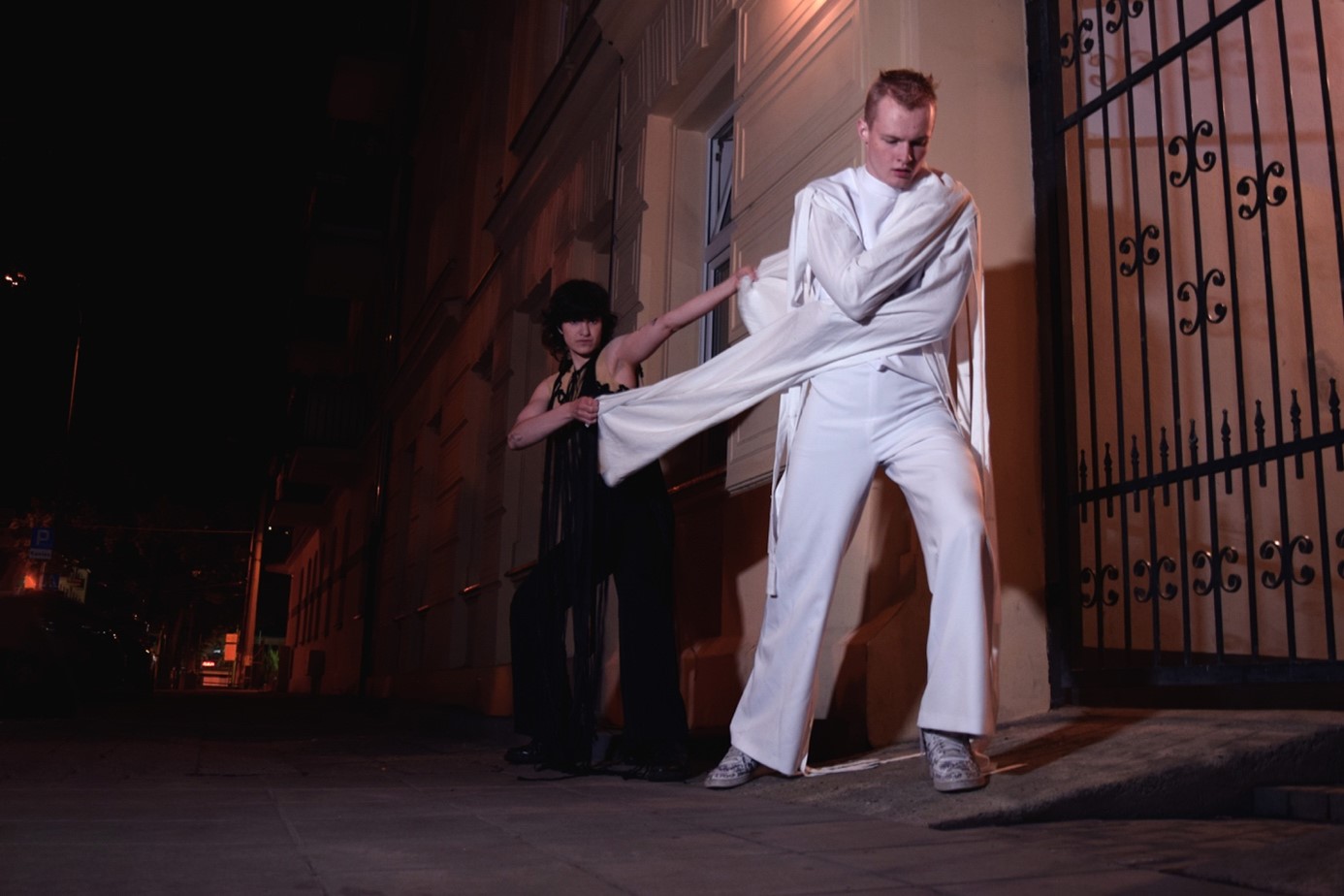
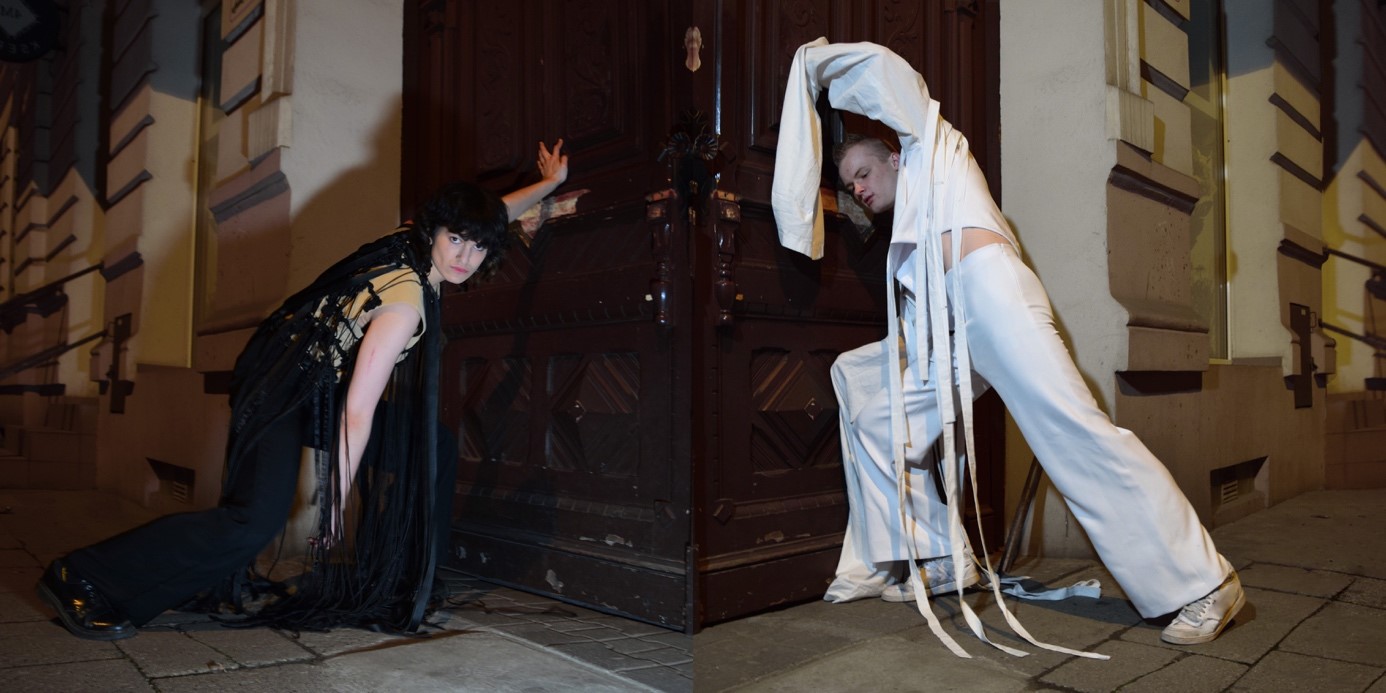
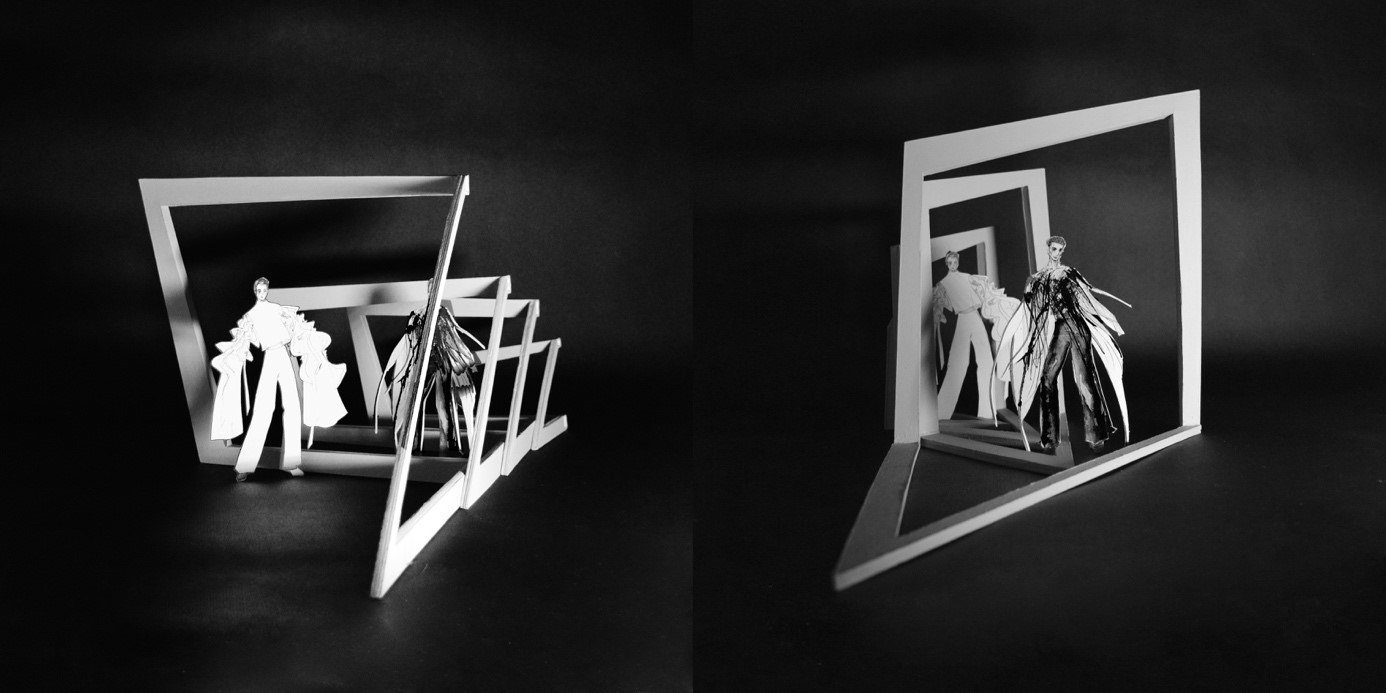
Costumes for the titular characters of Dr Jekyll and Mr Hyde. My main goal is to portray the two radically different natures of the characters, their internal struggle, and the gradually intensifying madness within them.
The smooth form and use of white materials in the first costume, contrasted with the structural quality of the second, black costume, emphasize the opposing characteristics of the figures. The designs also allow for modification of the costumes’ forms: in the first costume, this is achieved through fastenings sewn into the sleeves, while in the second, through concealed pockets.
III. MAJA SAWICKA
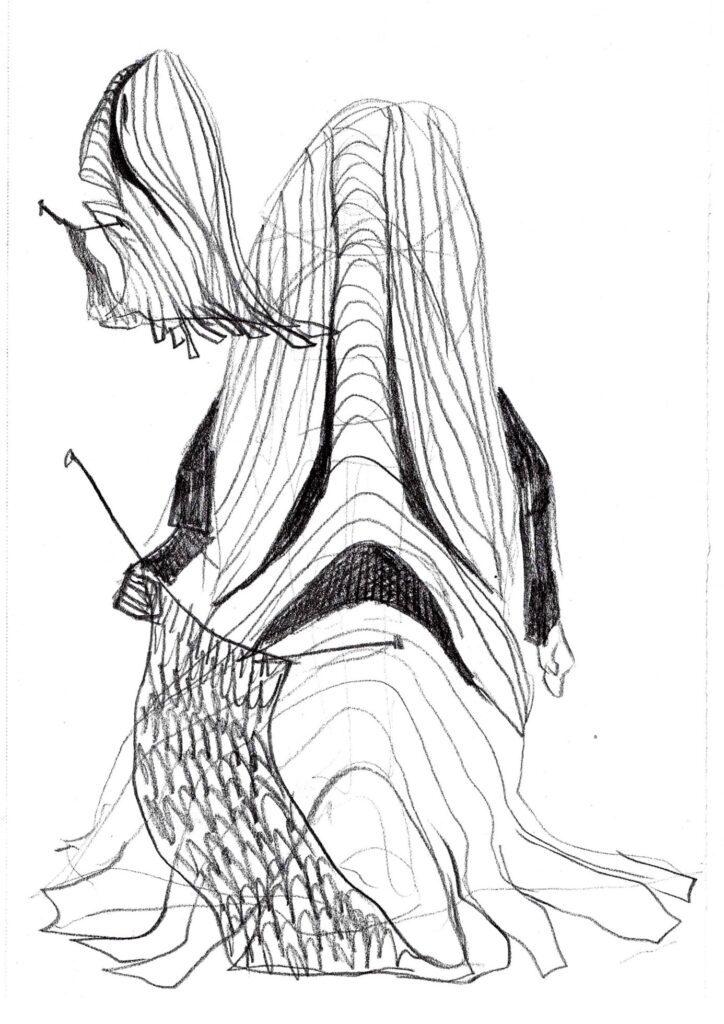
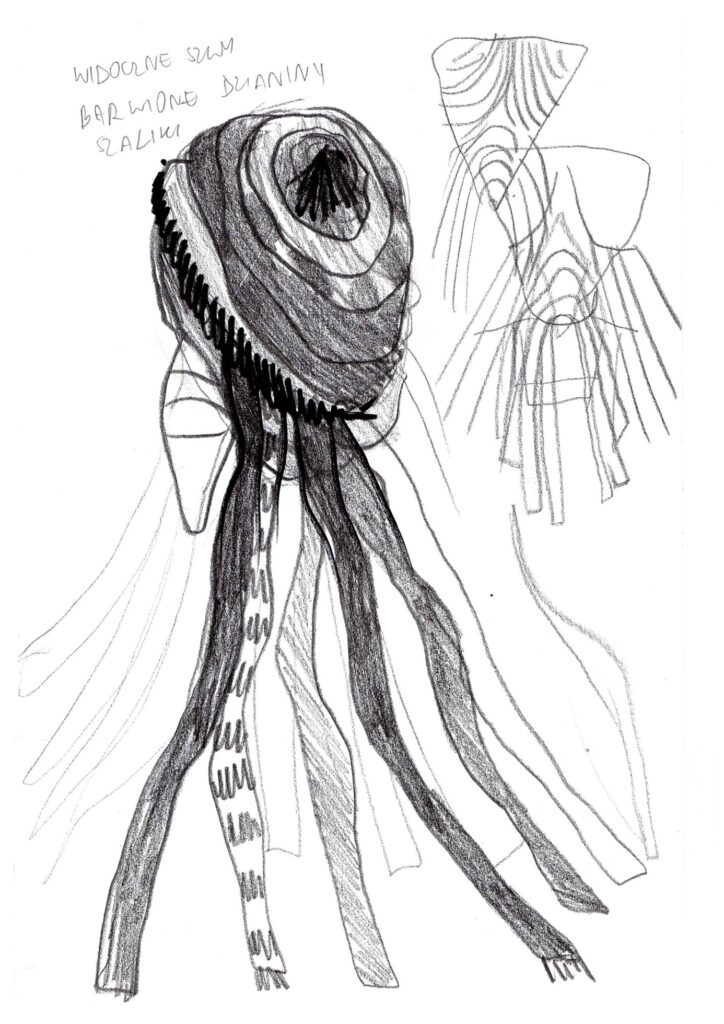
The form is inspired by a pessimistic worldview and the grotesque humor of Monty Python, where dark humor meets a somewhat absurd philosophy of existence. The form is not only tragic but also comic in its despair—full of paradoxes.
The creature is made of straps and scarves that cascade down its body, concealing the figure. From its face flow scarf-like tears, which it knits itself.
The work introduces a contrast between pessimism and grotesque. The creature’s suffering is exaggerated, almost theatrical, while its actions (knitting scarves) are so laborious and self-perpetuating that they take on a caricatural, nearly absurd quality. It is itself the cause of the condition it inhabits—a spiral of hopelessness.
IV. ANNA KRAJEWSKA
Movement is a prefiguration of the image.
Clothing […] has the ability to shift attention […] into the realm of ideas, values, emotional states, experiences, and beliefs. It becomes a sign and, as such, refers to objects and states other than itself.

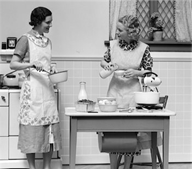
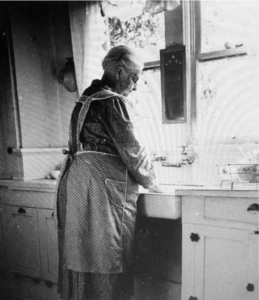
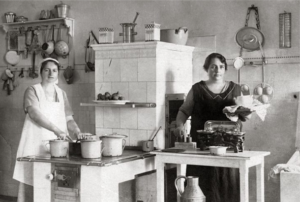
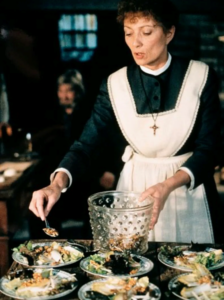
As part of the appendix to my diploma project, I reflect on the relationship between cooking and creating. Particularly important to me is the question of edibility and the sensuality of words.
One of the questions I pose in the project is: how can one create an apron for different women writers, taking into account not the subject matter, but the manner of writing (rhythm, structure, etc.)? An important impulse was the discovery and juxtaposition of two images—a woman cooking and a woman painting.
I consider whether, if different people were to describe an apron for cooking words, it would be possible to “dress” the writing process; whether writing itself can take on the character of cooking; whether it is a process that is bodily, sensual, and movement-based.
I am particularly interested in the relationship between researcher/translator and writer/poet, in which we are in fact dealing with two aprons (research work is also a creative act, which likewise requires putting on an apron for cooking/preparing words).
As part of the project, I collect descriptions of aprons from researchers, translators, and people engaged with literature, and present them in the form of an anthology, while also searching for a visual framework (visual essay / video essay / performance).
Nine researchers/translators have been invited to the project, including Małgorzata Łukasiewicz, Lucyna Marzec, and Joanna Lisek.
The invited participants responded, among others, to the following questions. In describing an apron for a specific writer, I am interested in several aspects:
The visuality of the apron, together with the reasoning behind its form (e.g. it has pockets in which commas are hidden; its texture is rough; it wipes off unnecessary adjectives, etc.).
Example questions:
Is it long/short/voluminous/narrow/loose/tight/tapered, etc.?
Does it have sleeves? If so, are they long/loose/puffed/with cuffs, etc.?
Does it have pockets—what kind/how many/where are they placed?
Is it tied, slipped on, or inscribed?
Color, texture, structure.
Movement — the process of preparing words.
Example questions:
With what kind of movements are words taken out/prepared (quick/precise/clumsy/disordered, etc.)?
Are tools or vessels used? What are these vessels?
How are the words prepared (cut/washed/peeled/stretched/rolled, etc.)?
Are the words tasted during preparation?
Are spices used—and what are they?
The process of serving words.
Example questions:
How are the words arranged once prepared?
What do they taste like?
What is her relationship to the words after preparation?
Does she take off the apron after cooking?
These questions do not need to be followed directly—they serve rather to illustrate a way of thinking that interests me.
Edyta Stachewicz on Annie Ernaux
Her apron is short and narrow, without sleeves or any unnecessary embellishments, with a smooth texture—just like her writing style, characterized by economy, a pursuit of simplicity, and universalization. Yet her prose is only seemingly devoid of emotion—these are hidden in deep pockets, waiting to be taken out and inserted between the lines, where they await attentive readers.
The apron’s color is very intense—a deep, saturated red that draws attention and does not allow the gaze to drift away. The artist is uncompromising in her work and communicates directly what is important to her.
Ernaux pulls out words with a decisive gesture, then examines them carefully against the light, turning them over, considering whether they are appropriate. She washes them under a warm stream of water, cleansing them of what is unnecessary—what might blur the image or render the message imprecise. She peels them, revealing successive layers of meaning, and then cuts them. She does this slowly and precisely, consistently continuing the process until she is certain they have the exact shape she intended. Some words she rolls out, so that they expand in scope—so that they can describe more. Throughout the process, she continually controls the result by tasting and smelling the prepared words.
Finally, she places the finished words directly onto plates, in small portions. They taste distinct, even though they are only lightly seasoned—as if she draws out their inherent potential. She does not remove her apron, as she sees being a cook of words as an ongoing vocation—the process of cooking never truly ends. Words must be gathered from everyday life, caught from more or less accidental utterances and conversations, and one must remain open to the surrounding world so that new words may be born within her.
Sandra Piełot on Emily Dickinson
Emily Dickinson puts on an apron. She wraps herself in a floral fabric of words, stained with the colorful crayons of the meter of children’s verses. The apron has no sleeves; its cut is relatively simple—cut from the same pattern as her poetry. In its large pockets, she hides a handful of unprecedented and surprising punctuation, mixed with a collection of capital letters that she so likes to place in unexpected positions.
The apron is short, like her stanzas. Its edges are unfinished, as if cut with the sharp blade of a sarcastic punchline. Dashes scatter across the floor. Dickinson begins to cook.
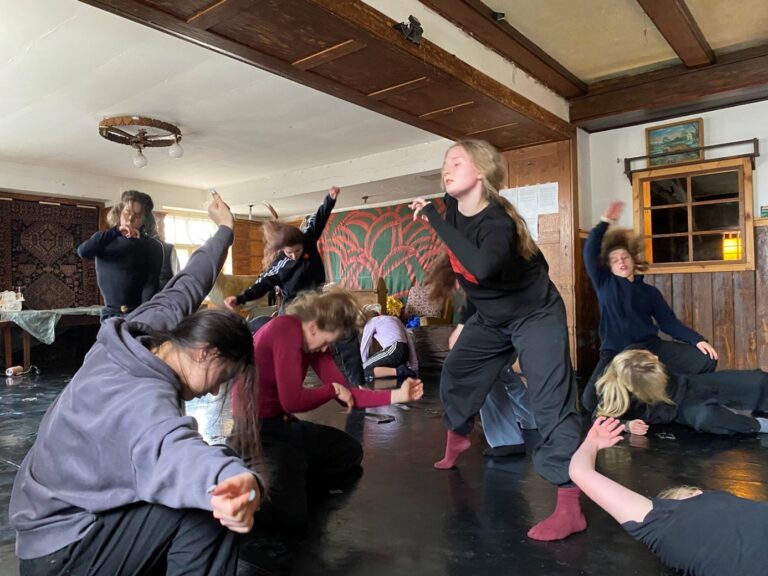
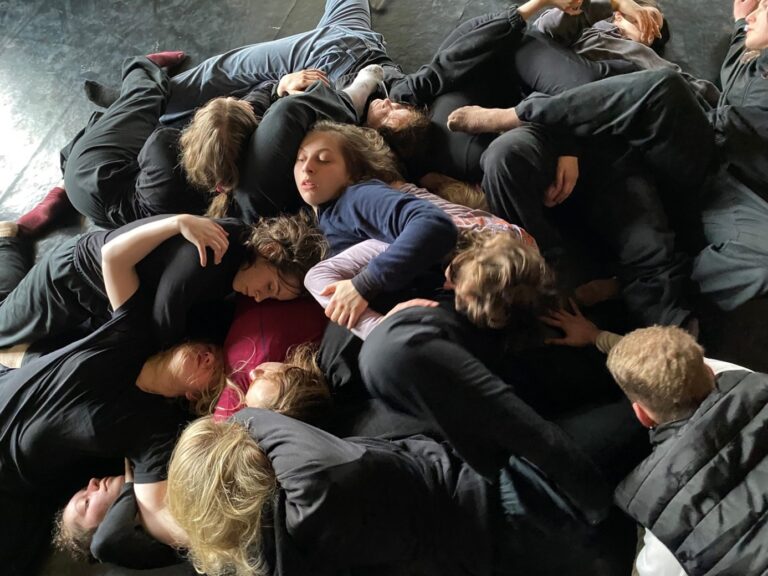
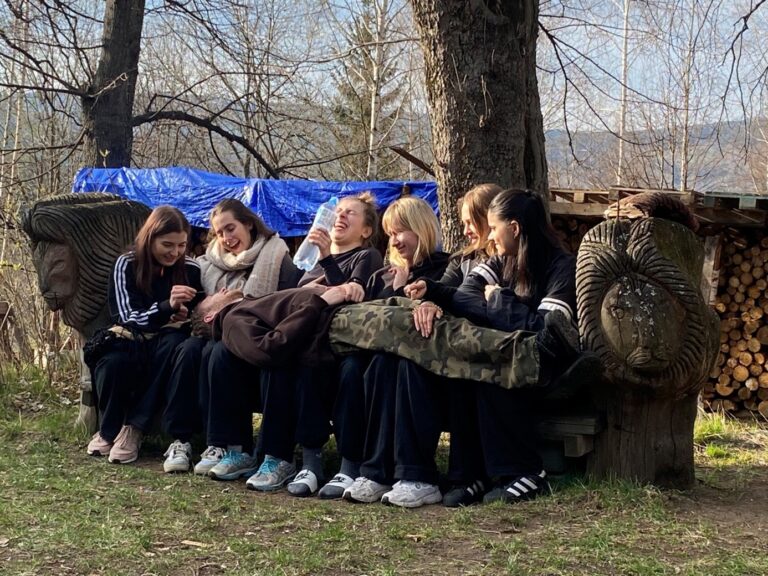
Workshop activities based on, among others, the above concepts (during the plein-air workshop, additional works by students of the University of the Arts in Poznań appeared—students who were interested in collaborating with students from our Academy in order to explore the performative potential of their visual forms) were carried out in April 2025 at the headquarters of the Teatr Cinema in Michałowice, Lower Silesia.
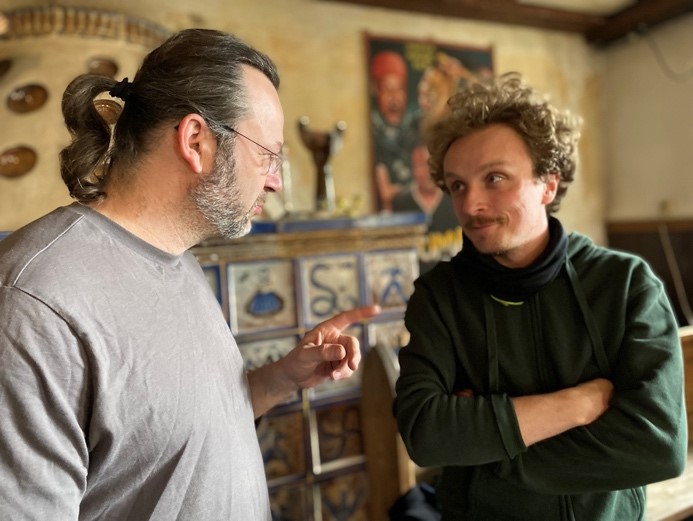
The laboratory involved intensive workshop exercises combined with individual consultations, providing support at every stage of the project. Academic and artistic supervision of the workshop process was provided by Piotr Tetlak (Faculty of Interior Architecture and Scenography, University of the Arts in Poznań), Sylwia Hefczyńska-Lewandowska (Faculty of Dance Theatre in Bytom, Academy of Theatre Arts in Kraków), and Mateusz Barta (Puppet Theatre Faculty in Wrocław, Academy of Theatre Arts in Kraków).
The project brought together a group of over a dozen participants who, with commitment, responsibility, and creativity, explored the possibilities of revitalizing and embodying. The creative process unfolded along two parallel paths. One focused on activating imagination through the integration, animation, and embodiment of objects and forms, in order to fully explore their scenic and expressive potential. This involved a process of searching through improvisation, as well as the exchange of observations following movement and animation sessions. The aim was to crystallize ideas around the investigated forms and to develop possible modifications or improvements in relation to their performative impact.
Students from the Studio of Theatrical Phenomena proposed several visual forms and costumes made from diverse materials, which opened up different creative possibilities and directions. It became a kind of play with form—a confrontation with varied matter (yarn, transparent fabric stretched over a metal frame, modeling mass, flexible metal). The laboratory was oriented toward spontaneous exploration and the joy of discovery.
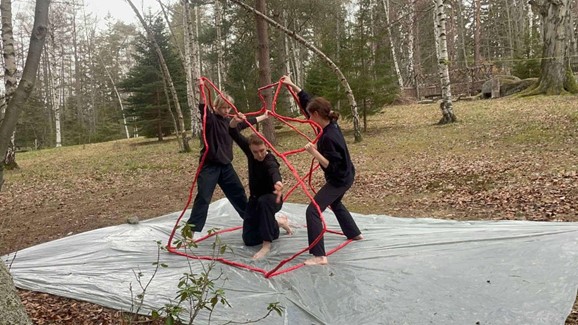
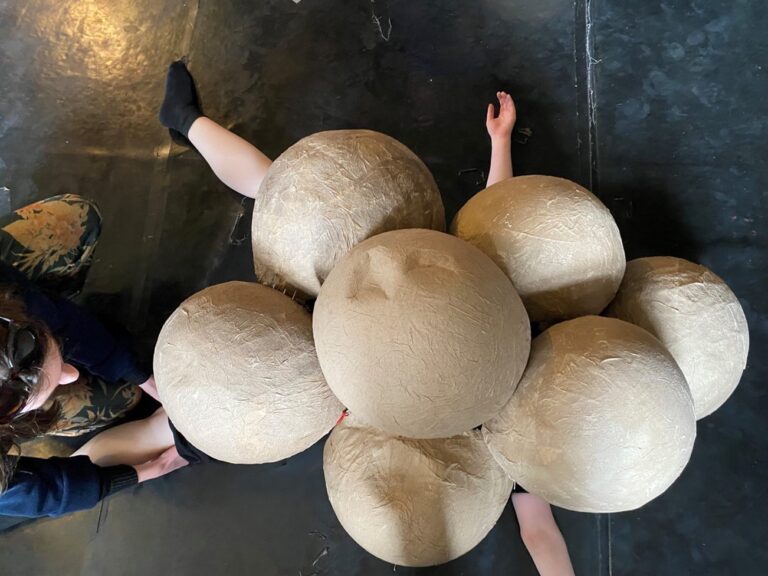
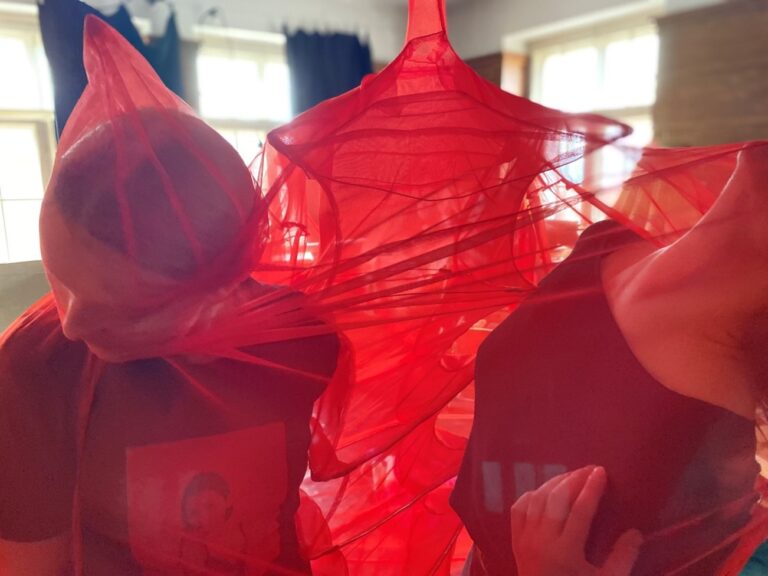
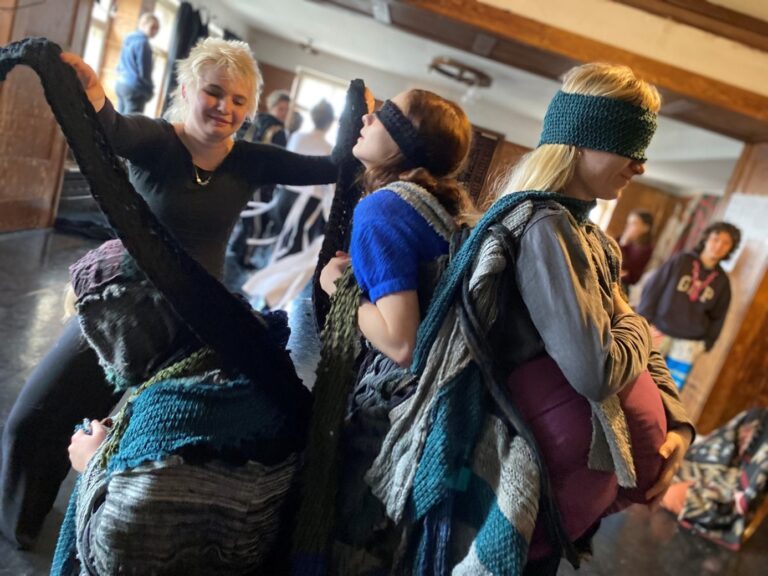
The second track was associated with a greater responsibility for the final outcome, as it concerned an object/form developed by Faustyna Stark as part of her diploma project at the University in Poznań. In this case, the process followed a similar path (movement improvisation sessions, collective discussion of possibilities, and the search for appropriate animative solutions), but this time with a clear focus on bringing the exploratory process to completion in the form of a stage work. This final piece was ultimately presented as an integral part of Faustyna Stark’s diploma project.
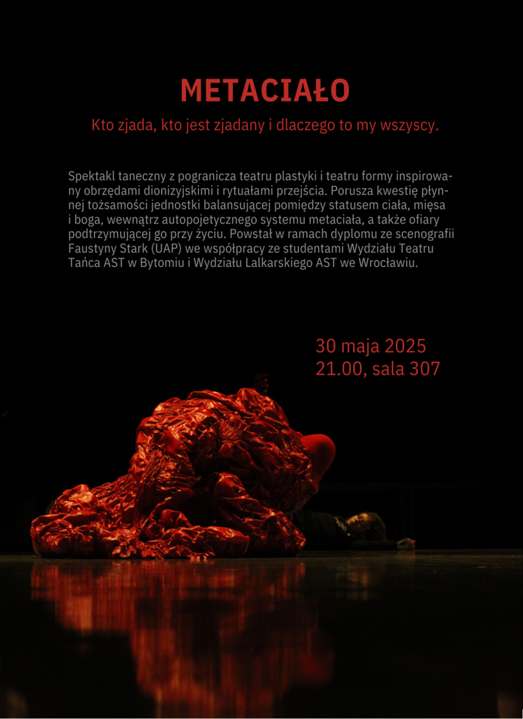
The creative process did not end with the plein-air workshop in Michałowice (which lasted only four days—intensive and densely filled with activity). From May 15 to May 31, 2025, further work continued at the Faculty of Dance Theatre in Bytom. This resulted in the creation of the dance performance Meta-body — Who Eats, Who Is Eaten, and Why It Is All of Us, situated at the intersection of visual theatre and theatre of form, and inspired by Dionysian rites and rites of passage.
The performance addresses the fluid identity of the individual, balancing between the status of body, flesh, and god within the autopoietic system of the meta-body, as well as that of the victim that sustains it.
In summary, Meta-body was created as part of Faustyna Stark’s scenography diploma (Faculty of Interior Architecture and Scenography, University of the Arts in Poznań), in collaboration with Zofia Stasina (UAP, video realization), students of the Academy of Theatre Arts – Faculty of Dance Theatre in Bytom: Aleksandra Radkowska, Oliwia Gruca, Oliwia Bochniarz, Mikołaj Froń, Aleksandra Gawor, Karolina Kotwa, Gabriela Fielek, Julia Kulawik, Julia Gryczyńska, and Nikola Woronko, as well as students of the Puppet Theatre Faculty in Wrocław: Julia Bańburska and Natalia Dudziak.
A presentation of the work for the academic community took place on Friday, May 30, in Room 307 at the Bytom branch of the Academy of Theatre Arts. Due to time constraints and related organizational complications, the performance could not be presented during the diploma defense in Poznań (the defense date coincided with the summer examination session). However, during preparations for the premiere in Bytom, video documentation was created and subsequently presented during the defense in June 2025.
Tasks carried out within the research project:
establishing interdepartmental collaboration within the home institution between the Faculty of Dance Theatre in Bytom and the Puppet Theatre Faculty in Wrocław,
continuing inter-university collaboration with the Magdalena Abakanowicz University of the Arts in Poznań (UAP),
organizing an artistic plein-air workshop in the form of a creative laboratory at the headquarters of Teatr Cinema in Michałowice (April 2025),
rehearsal sessions for the performance Meta-body, based on the concept by Faustyna Stark (UAP), at the Faculty of Dance Theatre in Bytom (May 2025),
premiere of the performance Meta-body at the Faculty of Dance Theatre in Bytom and production of its video documentation (May 2025),
a post-performance discussion with the audience.
Outcomes of the research project:
expanding the knowledge and skills of students in the field of broadly understood performing arts through the crystallization and realization of ideas within a laboratory setting (development of movement language, body awareness, imagination, conscious artistic attitude, and the ability to select appropriate means of expression),
building common ground between students of different specializations, complementing fields of interest through interdepartmental collaboration, and fostering dialogue in an atmosphere of respect and openness,
broadening perspectives through the encounter of diverse viewpoints and strengthening intermedial forms of narration,
developing a language of communication within interdisciplinary practices,
presenting a performance as the culmination of the creative process to an audience—allowing for the confrontation of artistic intentions with audience reception,
promoting theatre, dance, and theatre of animated form,
building networks within the field of theatre arts.
As part of the project, a meeting with Zbigniew Szumski, creator and director of Teatr Cinema, had been planned. Unfortunately, it was not possible to conduct a formal lecture. However, the atmosphere of the place itself—the creative work center founded by the artistic duo Zbigniew and Katarzyna Szumski—strongly stimulated the participants’ imagination and curiosity about the artists of Teatr Cinema and their artistic path. This translated into informal conversations and inquiries, allowing participants to gain at least a partial understanding of the history of the place, the house, the theatre, and the people who create it.
Undoubtedly, the creative work center in Michałowice is an open and welcoming space, pulsating with creative energy—one where it is possible to engage deeply in artistic processes, away from external noise, in laboratory conditions conducive to creation. This aspect proved to be particularly significant, as emphasized by the participants, who spoke about dialogue, exchange, and encounter—not only with another artist, but above all with another human being—which, thanks to the conditions created in Michałowice, could fully and intensely take place.
Perspectives of the project participants:
Aleksandra Gawor
“Bodily and scenographic space determine the shape of drama and stage existence, becoming a metaphorical, light-sensitive narrative about the human condition in the universe. This project offers the opportunity to explore interactions between space, body, and object, which for me is a fascinating area of research and artistic practice.”
Oliwia Gruca
“(…) the most important element of creative inspiration is the experience of encountering and conversing with another person. I strongly believe that projects created by young artists are truly unique, as they are infused with a fresh energy that can be immediately felt.
The most beautiful thing about art is that it is alive (…)”
Oliwia Bochniarz
“I wish to better understand the creative mechanisms that guide my actions, and to learn the perspectives of those who shape this space. It is a search for a deeper connection between body and matter, movement and prop, conscious gesture and the elusive energy of organic creation—a symbiosis of these elements. I value the creation of a space where these spheres can merge and collaborate, where the exchange of experiences and inspirations fuels further exploration.
(…) Journey, adventure, and search are the essence of my creative process—the discovery of what I can draw from the world and what I have to offer others, because life is based on exchange, and it is through this exchange that magic happens.”
Participants of the research project:
Students and faculty of the Faculty of Dance Theatre in Bytom:
Karolina Kotwa
Julia Gryczyńska
Julia Kulawik
Mikołaj Froń
Oliwia Bochniarz
Gabriela Fielek
Aleksandra Radkowska
Aleksandra Gawor
Oliwia Gruca
Nikola Woronko
Dr Sylwia Hefczyńska-Lewandowska
Students and faculty of the Puppet Theatre Faculty in Wrocław:
Julia Bańburska
Natalia Dudziak
Maria Głubisz
Alicja Smaczny
Dr Mateusz Barta
Students and faculty of the Faculty of Interior Architecture and Scenography in Poznań:
Faustyna Stark
Zofia Stasina
Maja Sawicka
Anna Karjewska
Aleksandra Sornek
Prof. Piotr Tetlak