

Autorzy:
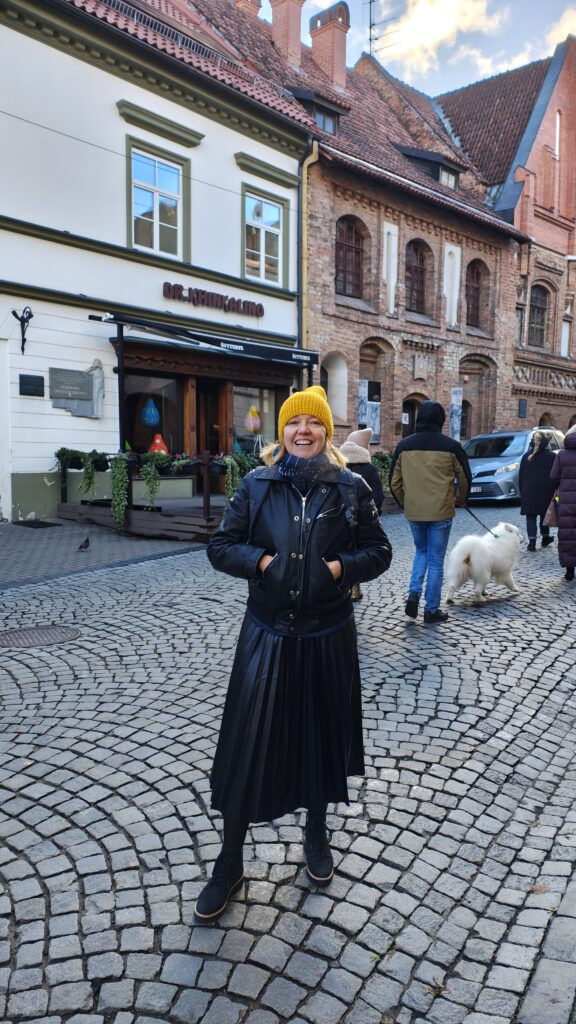
Katarzyna Kostenko – Deputy Chancellor for the Wrocław Branch, curator of the Metaformy Festival and the Puppet Net project.
Kosmos Theatre from Lithuania is one of the more intriguing phenomena from the perspective of visual and form-based theatre in Europe. It is, in a way, a theatre—although its performances tend to be more of a by-product of the group’s experiments and research projects, operating at the intersection of theatre, new media, and broadly understood science.
We travelled to Lithuania to meet the creators of Kosmos Theatre – Darius Vizbaras (producer, manager, and CEO of the theatre) and Žilvinas Vingelis (director and artistic director). Several months before our meeting, both enthusiastically welcomed the idea of discussing their artistic projects and the group’s philosophy of work. They were also curious about what our Academy has to offer. During the conversation, it became clear that we had much more in common than we had initially expected.
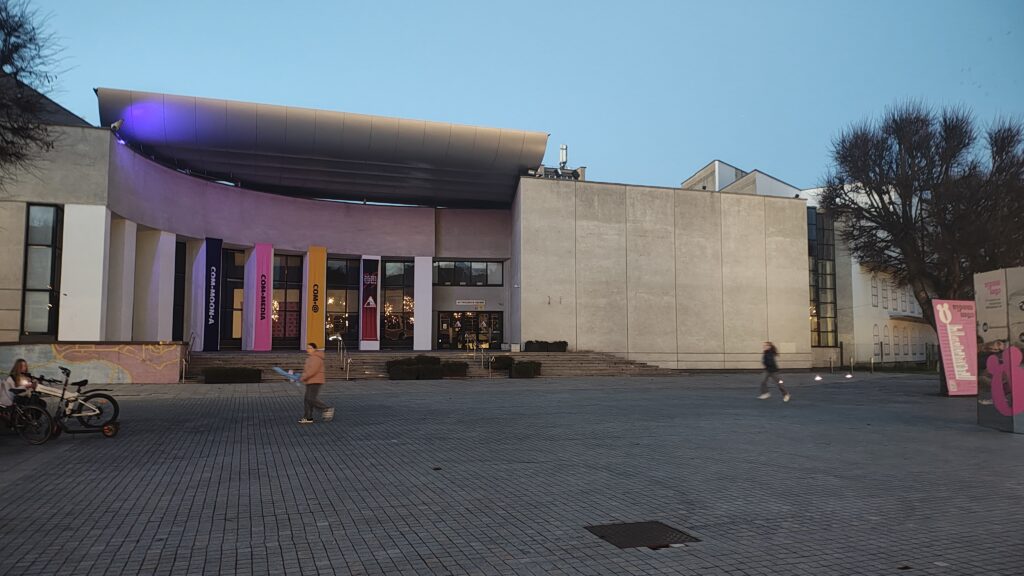
We scheduled our study visit—on which I was accompanied by Katarzyna Sawina, bursar of the Wrocław Branch of AST—so that we could attend one of Kosmos Theatre’s performances as part of the COM·MEDIA theatre festival in Alytus. During the festival, Kosmos Theatre presented its production Diletantas, directed by Žilvinas Vingelis. Alytus turned out to be a small town in central Lithuania, located about a two-hour drive from Vilnius. The municipal theatre, situated right on the main square—next to the town hall and, in a sense, in place of a church—makes a striking impression, as if the surrounding architecture revolves around it. Darius explained that this was a common urban planning strategy across the former Soviet republics. However, while such cultural institutions were ideologically elevated, this did not necessarily translate into their functionality. Today, these buildings are both an asset to Lithuanian culture (simply because they exist) and a burden, as they are technologically ill-suited to the needs of contemporary theatre.
I watched the performance Diletantas without any prior preparation, trying to leave as much room as possible for an initial, spontaneous reception—particularly important when encountering a new artist. On stage, we saw only one performer: the remarkable Airida Gintautaitė. In less than an hour, she managed to create a complete world composed of fragments of imagination, various approaches to artistic creation, and elements of the life of Jean Cocteau—a total artist of early 20th-century France: poet, writer, and filmmaker.
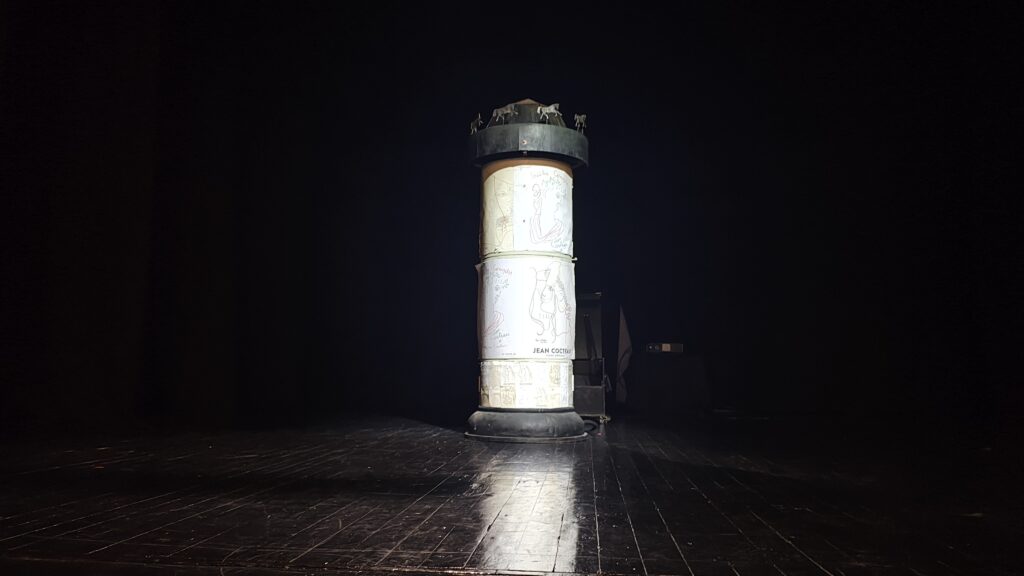
Airida Gintautaitė performs using elements of pantomime and object animation, but above all by entering into a relationship with a surprising “intelligent advertising column” that continually challenges the audience’s expectations. Her facial expressions and the precision of her movement are breathtaking, and I could fully appreciate the depth of her performance only when, stepping forward for the curtain call, she revealed her private self—through a gesture or facial expression so radically different from the one maintained throughout the performance.
The presence of new technologies embedded within the advertising column creates a contrast with Gintautaitė’s restrained and precise acting. At the intersection of these two interwoven worlds, the performance becomes deeply moving and allows for a more intimate encounter with Cocteau himself. From simple interactions with a mobile phone—through which the disoriented performer communicates in English with what might be the spirit of the artist—to the use of video projection, sounds produced by an instrument hidden inside the column, and even a miniature stage (a boxing ring for puppets), the column becomes a perfect, multifunctional, technology-infused total scenography.
At the same time, the very form of the column, as well as the visibly tangible mechanics of its individual components, make it feel strikingly material, even archaic. Just as archaic, in today’s world, is the form of communication represented by a notice or poster pasted onto such a column.
The presence of technology in this performance is not an addition. It coexists on equal terms with the presence of the actress, causing the audience to lose their sense of what is real and what exists only in the artist’s imagination. This mode of narration in itself reflects the dynamics in which the works of the French artist were created.
The performance functioned like a lens, focusing on what interests the Kosmos Theatre group. It encouraged the audience to ask how new media can coexist organically with other means of expression in theatre—not merely as a visual element or a staging device designed to produce a “wow” effect.
Almost as compelling as the performance itself was the conversation with Darius Vizbaras and Žilvinas Vingelis.
They spoke not only about how their group operates, but above all about the idea behind their projects. Kosmos Theatre effectively secures external funding to invite artists they find interesting to collaborate, in a process where it is not essential that the outcome be a theatre performance. What matters most is the opportunity to “test” the artists’ ideas. In a standard production cycle, there is usually no space, time, or resources for experiments with uncertain outcomes. The costs of unsuccessful ideas are calculated precisely and often treated as evidence of a lack of professionalism. Darius and Žilvinas recognized this impasse, which can inhibit the development of theatre, and placed the value of experimentation itself at the forefront. They support invited artists not only by giving them time and resources to “try something new,” but above all by connecting theatre-makers with specialists in new media and stage technology.
KOSMOS LAB is intended as a dynamic platform for interdisciplinary work, enabling the combination of classical theatre forms with the achievements of contemporary science and technology, such as VR, AR, immersion, interactivity, 360° film, programming, animation, video effects, spatial music, and art-tech installations. So far, Kosmos Theatre has invited artists and experts from various fields of visual theatre and intermedia arts to work in its laboratories: directors, choreographers, performers, set designers, video artists, lighting designers, composers, and creators working at the intersection of art and technology. Among the mentors and facilitators have been, among others, Duda Paiva, Yaron Abulafia, Matteo Spiazzi, Adrian Schvarzstein, AKHE Theatre, and Pierre Jodlowski.
These projects are developed irregularly and are not bound by standardized timeframes. Instead, they are adapted to the process required by each individual artist’s project. The idea of a laboratory for new theatre technologies should be—and in principle is—close to the mission of any academic institution, as reflected in the research projects of its faculty. It is therefore not surprising that a project like Kosmos Theatre emerged outside the structures of any academy or institutional theatre. For Darius and Žilvinas, programmatic autonomy is essential—independence that allows for complete openness to experimentation. The ability to develop their own original formats for working with artists is also a value in itself.
Kosmos Theatre is also an independent theatre group that produces its own performances. They describe their repertory activity as a multi-genre, visual theatre combining live music, puppetry, contemporary dance, and visual media. The creators emphasize that their performances grow out of scientific, artistic, and cultural research, while also being audiovisual, intermedial, and open to formal experimentation.
As I have been personally interested for many years in the issue of securing funding for artistic and research projects, I also spoke with Darius Vizbaras about the financial conditions in Lithuania for initiatives such as those undertaken by Kosmos Theatre. As he emphasized, funding bodies primarily recognize the value of laboratory-based projects, while securing support for the theatre’s artistic activities is considerably more challenging.
The trip was also an opportunity to map centres of visual theatre in Lithuania, in particular to learn about the structure of the Lithuanian Academy of Music and Theatre (LMTA), which has for years maintained a bilateral Erasmus+ agreement with the Stanisław Wyspiański Academy of Theatre Arts in Kraków. It remains a mystery to me how students from this Academy have not yet had the opportunity to present their work at METAFORM. We hope that future editions of the festival will provide a chance to make up for this oversight. Sometimes the most interesting things happen just across the border, yet we tend to assume they must be much farther away.
In brief: LMTA has its main campus in Vilnius, where the Faculty of Theatre and Dance operates, including the Department of Acting and Directing—recently headed by Kosmos Theatre’s artistic director, Žilvinas Vingelis. In addition, the Academy runs a faculty in Klaipėda (a seaside city said to be easy to fall in love with), where actors of visual and form-based theatre are trained.
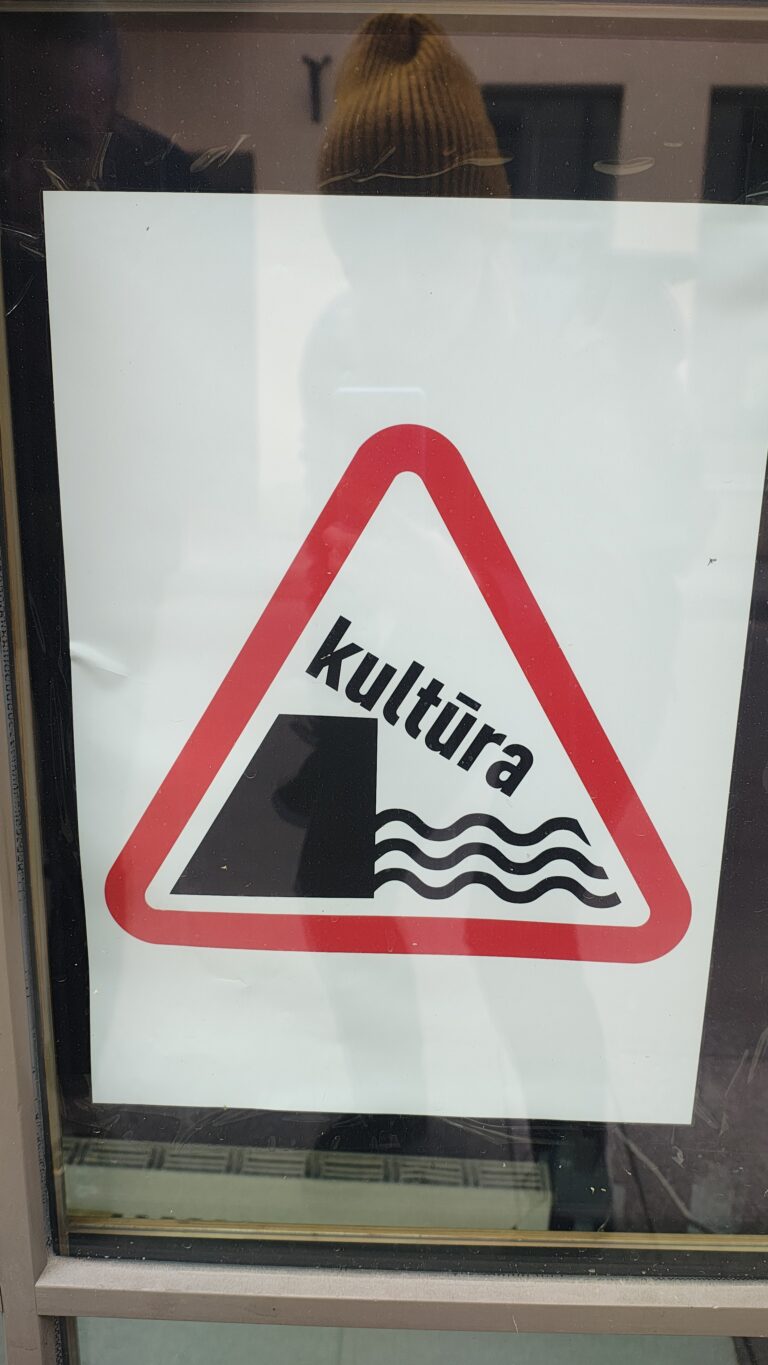
Writing this report, I cannot fail to mention that during our study visit, Lithuanians had already been protesting for over two months against the appointment of politicians from the populist party Nemuno Aušra to the Ministry of Culture. On this issue, the Lithuanian artistic community spoke with one voice, expressing concern about the politicization of culture and its subordination to ideology. Although grassroots protests led within days to the resignation of the newly appointed minister, and in November to the transfer of the ministry to another party, actions by the community united around these protests continued—in defense of democratic values more broadly. “Mes esame kultura” (“We are culture”) became the slogan of the movement and a symbol of solidarity among Lithuanians united in the defense of cultural independence.
If you want to find out more about Kosmos Theatre, I encourage you to visit their website: https://kosmostheatre.com/
Additional information: LMTA | Pagrindinis