


Authors:
Joanna Gerigk – theatre director, theatre scholar, author of texts and theatrical adaptations. Lecturer at the Academy of Theatre Arts in Kraków, Wrocław branch. Holds a habilitated doctorate in theatre arts. Researcher of devised theatre. Since 2011, she has collaborated as a dramaturge and director with Divadlo NoKakabus in Prague.
The purpose of the trip to Portugal, which took place from December 4–7, 2025, was to meet with the founder of Tarumba Theatre in Lisbon. The meeting with its creator was held at the café “A Brasileira” in the Chiado district. This is a unique place, operating since 1905, and one of the three oldest establishments in Lisbon.
As it turns out, this is also where Fernando Pessoa used to spend much of his time. There are, in fact, many such fascinating places in Lisbon.
Tarumba Theatre – Teatro de Marionetas is a professional theatre company founded in 1993, currently led by artistic directors Luís Vieira and Rute Ribeiro. Initially, it functioned as a collective of artists from various disciplines: theatre, film, sculpture, and art history. What united them was a passion for puppetry and an awareness of the need to revitalize it in Portugal. It is worth noting that, unlike in the Polish system, there are no schools in Portugal that teach puppetry. This role has been taken on by Tarumba Theatre. For years, it has consistently worked to enable artists and performers to gain knowledge in this field and to enrich the artistic community through productions using puppetry, visual theatre, dance, and visual arts.
For 25 years, Tarumba has organized the International Festival of Puppetry and Animated Forms – “A visual feast without limits”, FIMFA Lx (Festival Internacional de Marionetas e Formas Animadas). The institution is eager to create and experiment, mainly for adult audiences. They particularly enjoy adapting classical texts into performances that combine puppetry and visual language, strongly engaging viewers. At the same time, they are equally committed to educational, workshop-based, and research activities. During this visit, I had the opportunity to participate in workshops led by Frank Soehnle from the State University of Music and Performing Arts in Stuttgart. The participants included artists from various European countries interested in animation and developing skills in working with form.
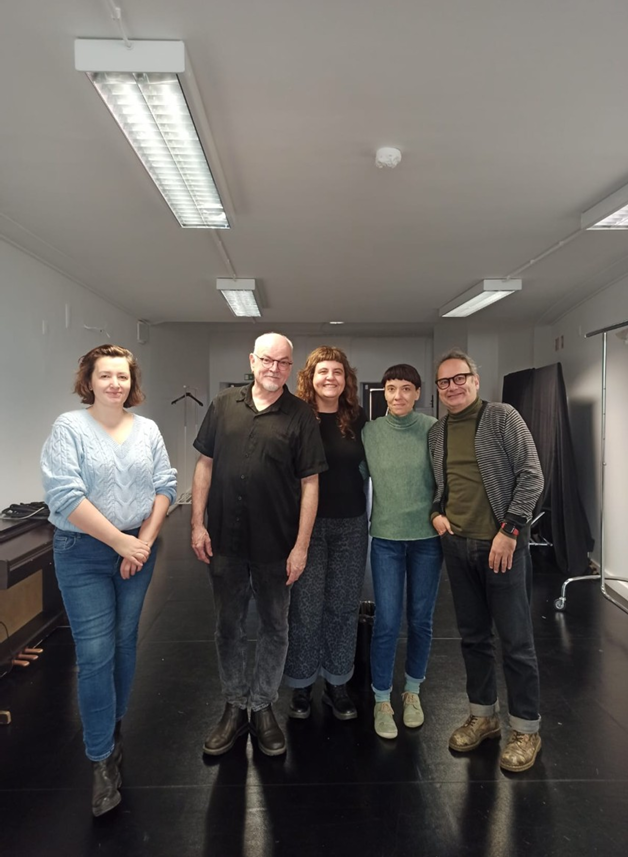
The theatre’s headquarters at CAMa – Centro de Artes da Marioneta (Puppetry Arts Centre) also serves as a space for bibliographic and iconographic documentation. It houses a rich collection of puppets gathered by the theatre over more than 30 years of activity.
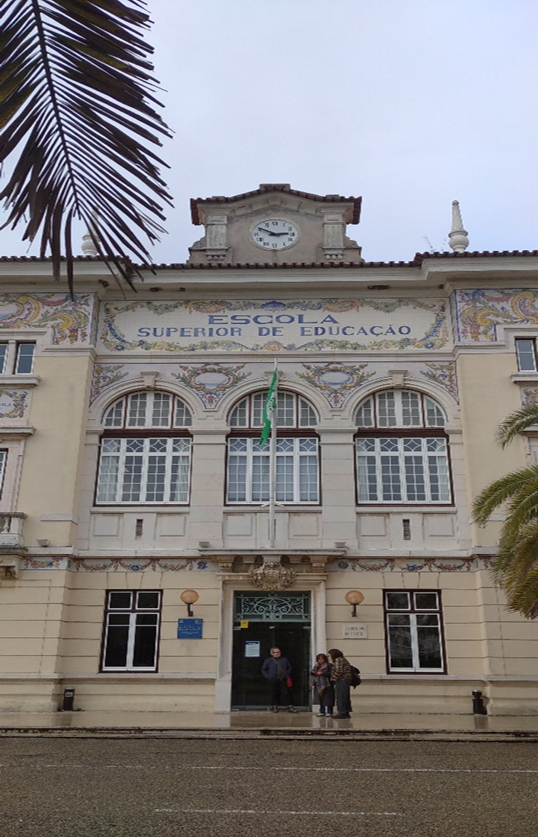
Part of our stay in Lisbon also involved learning about Tarumba Theatre’s activities aimed specifically at teachers and those working with children and young people. We had the opportunity to observe classes conducted with a group of postgraduate pedagogy students, during which participants learned theatrical tools (such as shadow theatre) that can be applied in children’s education.
During the meeting, we also discussed the IMPULS Project, whose aim was to foster cooperation and exchange of experience between theatres from three countries: Portugal, Finland, and Lithuania. The project lasted two years and was funded by the Creative Europe programme.
The time spent with Luís and Rute, as well as the stay in Lisbon, I consider very fruitful and rich in diverse experiences. Such visits further reinforce my belief in the importance of exchanging experiences, maintaining mutual connections, and initiating joint activities.
