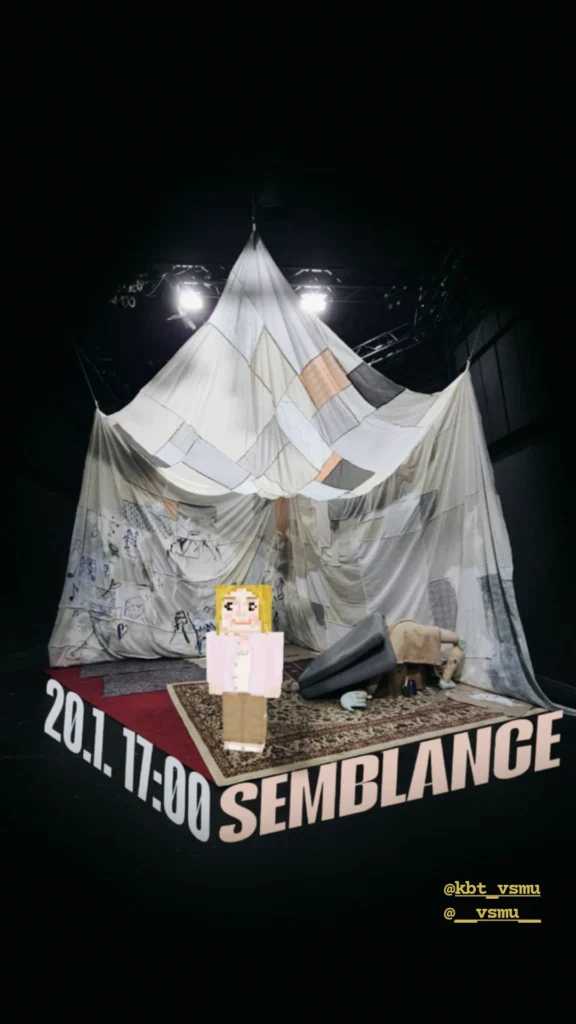


Maja Haliniak – actress, puppeteer, student of AST Wroclaw.
What were your first impressions of Bratislava?
My first impression was that it was a beautiful, historic city – especially the Old Town. But once I left the historic centre, I had the feeling that I had travelled back in time by several, maybe even a dozen years.
And what about the university?
My first thought was, “Wow, it’s so beautiful here!” The building itself is a stunning historic structure right in the city centre. We took the lift to the third floor, where the head of the department showed us the studios and rehearsal rooms. It turned out that the entire Puppet Department was located on just one, relatively small floor. In Wrocław, I’m used to having an entire building at our disposal! There, the acting students had one rehearsal room at the end of the corridor, one ballet studio, one additional rehearsal space, and one black-box studio adapted for presentations – and that was it. I won’t lie, it was quite a challenge.
And… the puppet collection?
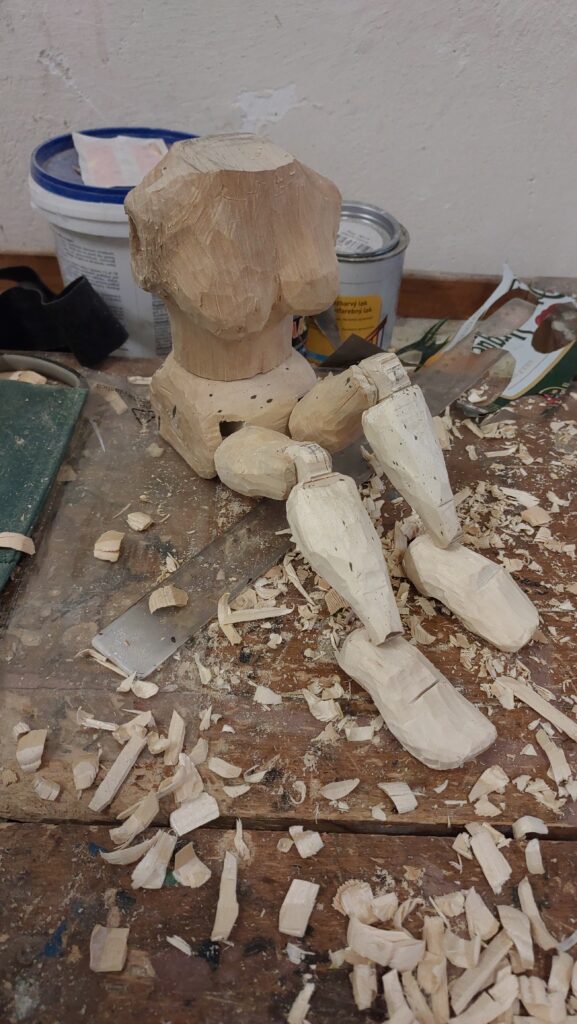
Most of the puppets available to students were practice puppets used during classes. I saw many marionettes, especially Sicilian ones. Down in the basement there was also a sculpture and scenography workshop, where most students built their own puppets and stage forms. Next to it was a storage room filled with props and puppets from previous years’ examinations.
What were the biggest differences you noticed in the teaching methods?
The curriculum was quite different. The acting programme didn’t include separate classes dedicated to masks or rod puppets, but it did include marionettes, Czech puppets (javajkas), and glove puppets. Alongside these, there were movement and voice classes, as well as acting assignments.
One particularly interesting aspect was the strong collaboration between different departments – scenography, acting, directing, and production. Another difference was the degree structure: everyone followed a three-year Bachelor’s programme followed by a Master’s degree.
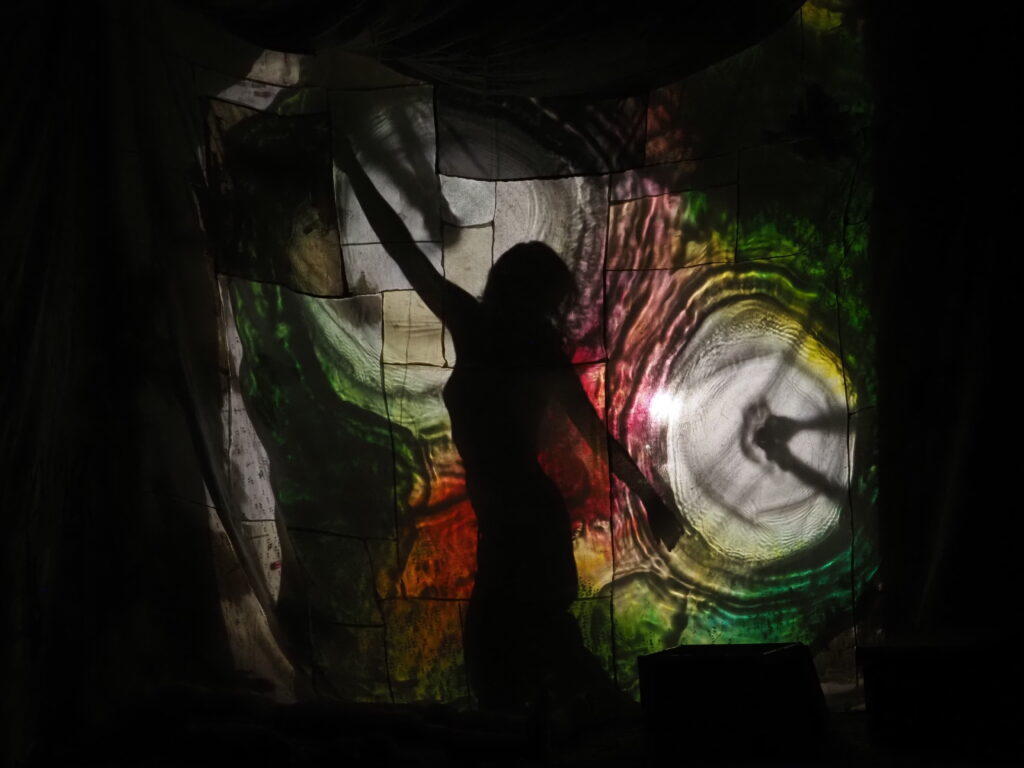
The main course was called Actor – Puppet – Object, which was similar to our core puppetry classes, except that it focused on a single technique. In my case, that technique was the javajka.
I also encountered a teaching approach that is rarely used at my home university. The instructor would give us an assignment, and then we would have half an hour – or sometimes even half of the class – to prepare a scene or short performance. Afterwards, we would present it and discuss the results together. Occasionally, we even worked this way during examinations, creating scenes on the spot. Having several groups working simultaneously on different tasks proved to be surprisingly effective.
When it came to learning the javajka technique itself, we moved to practical work very quickly. We practised operating one puppet with two performers. One person controlled the head, while the other controlled the arms; alternatively, one performer animated the head and one arm, while the other controlled the second arm together with the hips or legs, depending on the scene. This gave the puppet remarkable expressive freedom and was an excellent way to develop the technique – especially because our final exam contained many fight scenes, and the instructor wanted us to create elaborate choreographed sequences. We spent a great deal of time working on them.
What do you remember most fondly?
The people and the friendships I made.
We spent a lot of time talking about the differences between our schools—how things work in Poland compared to Slovakia, how students feel about studying there, and the differences between the Polish and Slovak theatre scenes.
But beyond that, we simply became friends. I owe a lot to what was then the second-year class. They welcomed me openly, and I genuinely felt like one of them. We built a real sense of community while working together on one of the exams.
I performed that exam in Slovak, so my journey of learning the language became a shared experience. My classmates patiently helped me throughout the process, which made it much easier – and much more enjoyable.
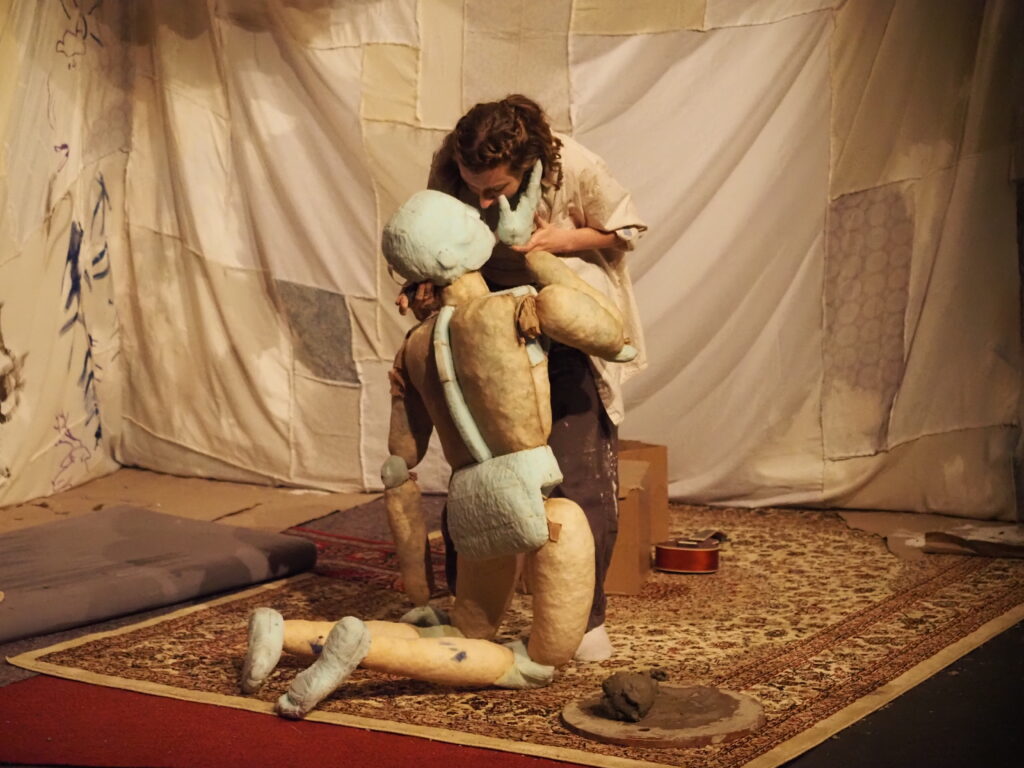
The second wonderful experience was having the opportunity to create my own project for the Stage Project course. It was the first time I had created an entire performance completely from scratch.
The biggest challenge was that I was working with people from another country who didn’t speak my native language, in an environment that was entirely new to me. Organising rehearsal schedules, finding rehearsal spaces, discussing ideas with my supervisor – it was all unfamiliar territory. I also had to think about promotion, even practical questions like where I was allowed to put up posters. It was incredibly demanding, but also one of the most valuable learning experiences I’ve ever had.
What was the project about?
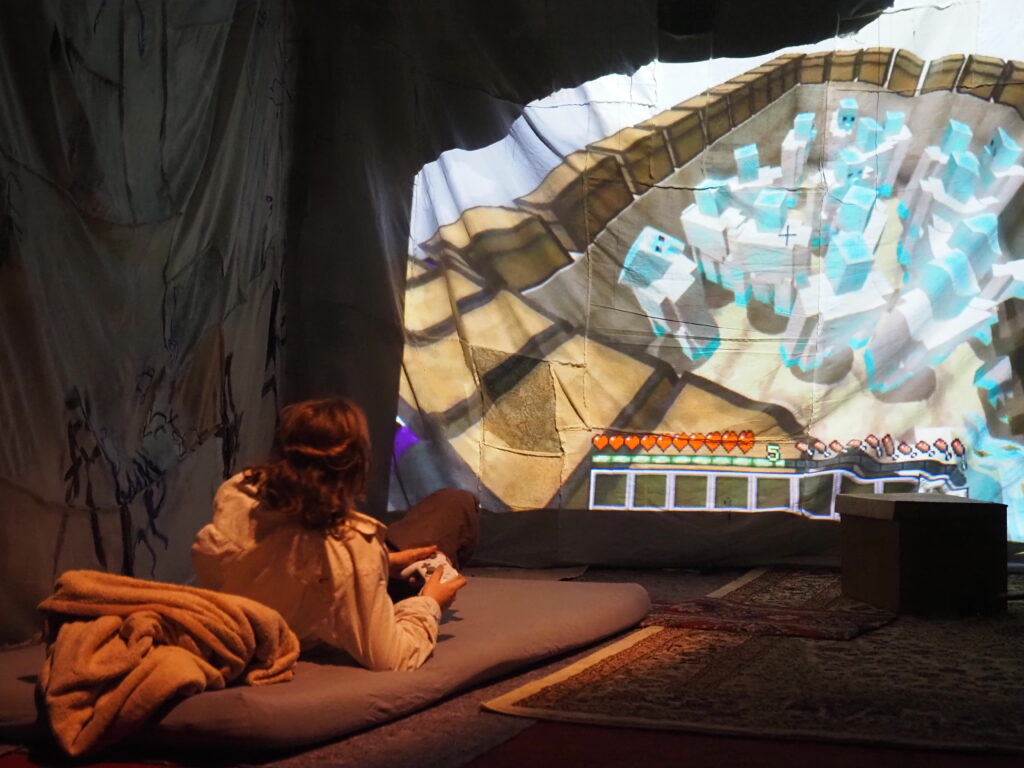
It was a monodrama about a young woman who leaves home to study and enters adult life. She gradually loses contact with her friends and her former life, and tries to fill that emotional emptiness through superficial romantic relationships.
I used puppets as personifications of the girl’s partners and attempted to portray the imaginary world she had created in her own mind by using the visual language and expressive means of theatre of form.
Looking back, what stayed with you from that experience?
The exchange gave me a tremendous sense of independence, confidence, and responsibility for my own life. I arrived there without knowing anyone and had to figure everything out on my own – finding accommodation, learning where the school was, how to get there, where the city centre was… all those seemingly small things that turn out to be incredibly educational.
Experiencing a completely different educational system also meant a lot to me. At the AST in Wrocław, our programme is extremely intensive in many respects.
In Bratislava, I finally felt I could breathe.
Freedom?
Yes – freedom in every sense, but especially creative freedom.
Nobody imposed anything on me. At that point, I wasn’t fully a VŠMU student anymore, nor was I fully at AST in Wrocław, so I was given a great deal of artistic independence.
What do you wish you had known before going there?
That the Puppet Department occupies just one floor and three classrooms!
That finding accommodation isn’t easy, especially since the university doesn’t provide student housing.
And that at the beginning you simply need patience. The feeling of uncertainty fades with time. Other than that, there’s really nothing to be afraid of. Communication is easy, the city has excellent public transport, and there are plenty of wonderful places where you can enjoy your free time.
Which skills you developed in Bratislava have helped you most since returning to your home university?
Spending an entire semester working with the javajka made me love that technique even more than I did after my second year. I grew enormously – not only as an artist, but also as a person.
While creating my monodrama, I made mistakes because it was my first time undertaking such a project. I’m grateful that I was able to make those mistakes there, surrounded by such wonderful people, and learn from them.
I came back with a strong conviction that meaningful theatre can be created under any circumstances.
During my stay, I watched many Slovak productions that truly impressed me, fully aware of the challenges their creators face. That experience taught me that artistic value is not determined by resources, but by imagination, commitment, and the people who bring theatre to life.